An email channel connects your support email address to HappyFox Help Desk. When customers send emails to that address, a ticket is created automatically.
Applicable plans: All plans except Basic.
Before you begin
You will need:
- An email address you own and control (e.g., [email protected])
- The ability to configure email forwarding on that address
- (For outgoing email only) Login access to your domain's DNS provider
Step 1: Add the email address
1. Go to Channels > Email > Email Addresses tab.
2. Click Add Email Address.
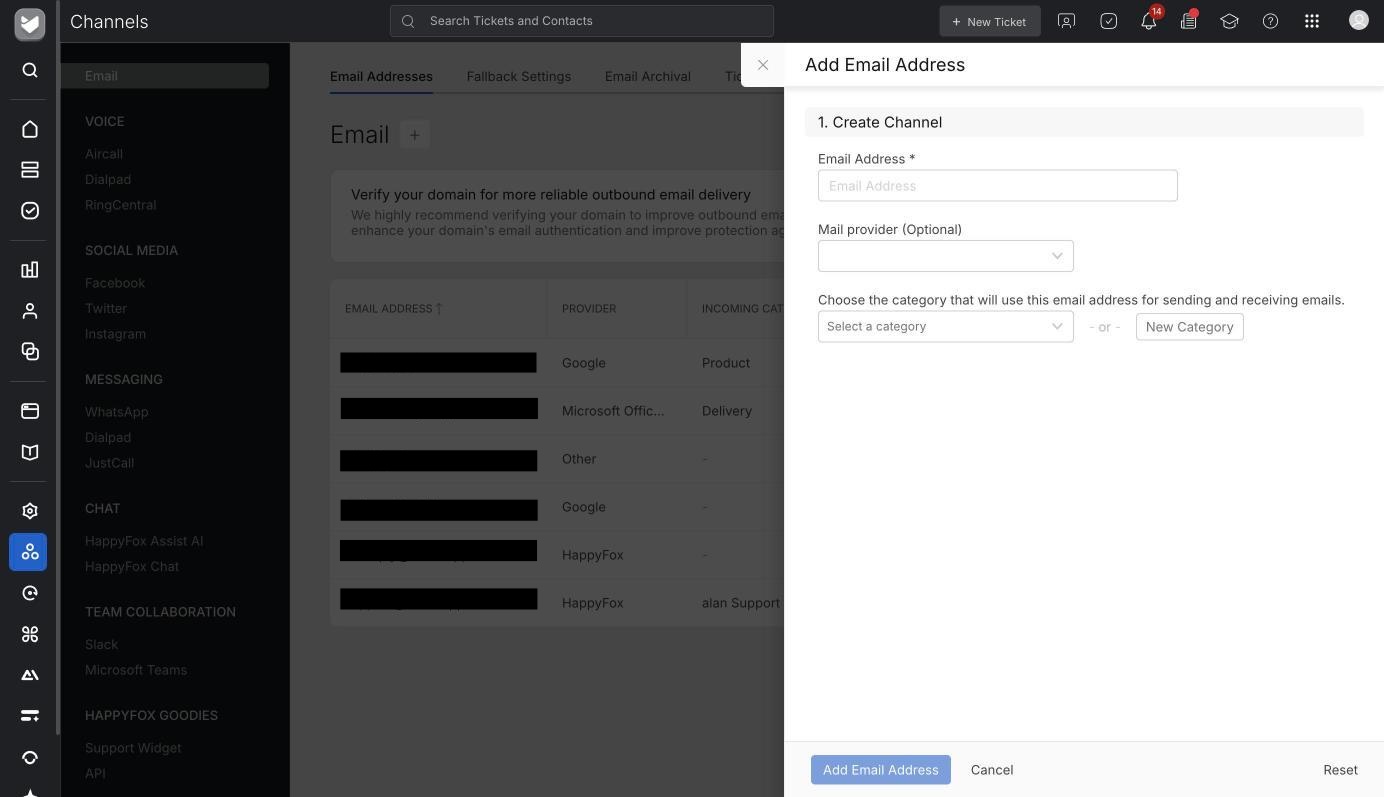
3. Fill in the three fields:
- Email Address: The full address you want HappyFox to use (e.g., [email protected]).
- Mail Provider: The service that hosts this email address. Choose Gmail, Microsoft Office 365, or Other. If unsure, choose Other.
- Category: The category that tickets from this channel will be assigned to. If you have not created a category yet, click New Category to create one now.
4. Click Save.
Warning: The email address cannot be changed after saving. If you need a different address, you must delete this channel and create a new one. Double-check the address before clicking Save.
Step 2: Configure incoming email
After saving, the incoming configuration section opens automatically. The exact steps depend on the mail provider selected. Follow the instructions on-screen to connect your mailbox.
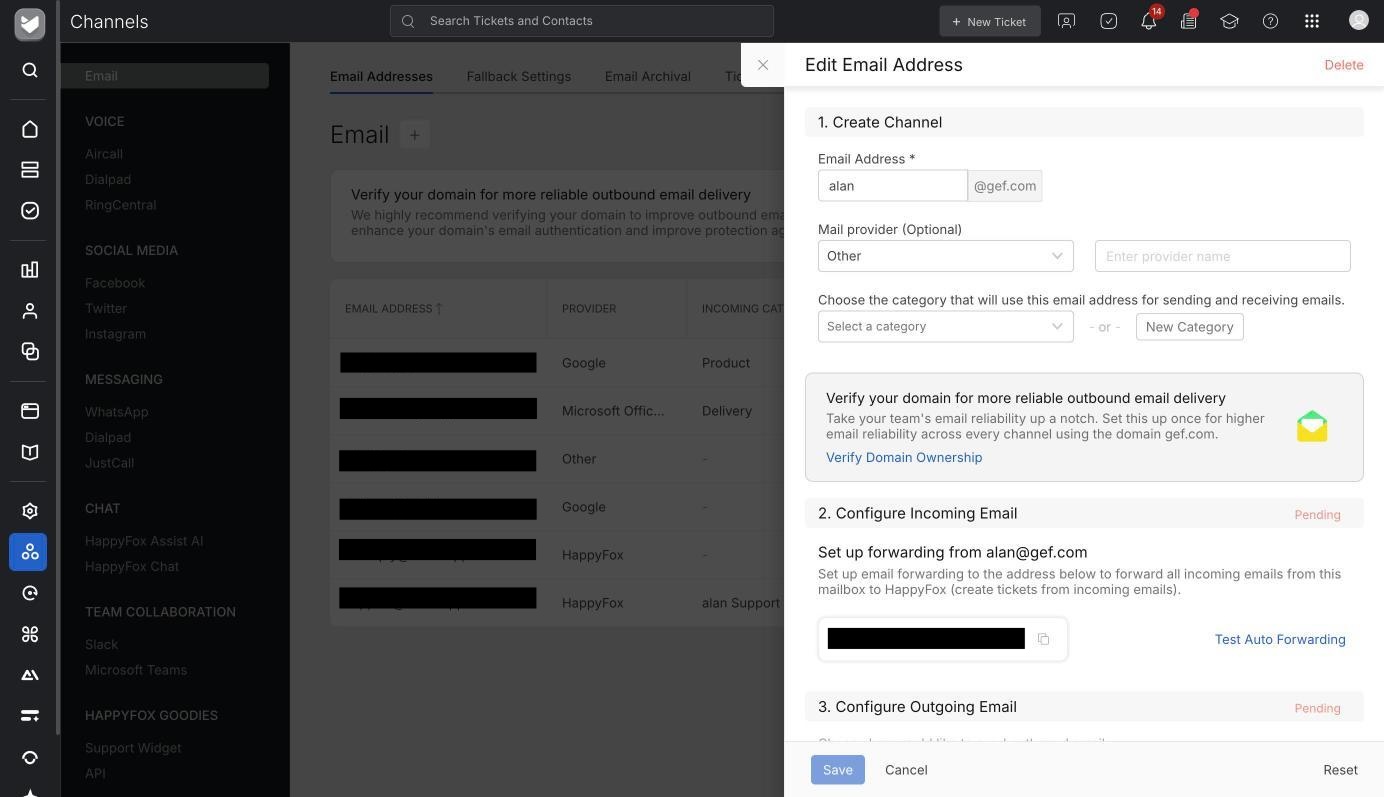
Once the mailbox is connected, set up email forwarding:
- Copy the forwarding address shown in HappyFox.
- Log in to your mail service that hosts the mailbox.
- Set up auto-forwarding to automatically route incoming emails to the HappyFox address you copied in step 1.
- Return to HappyFox and click Test Forwarding.
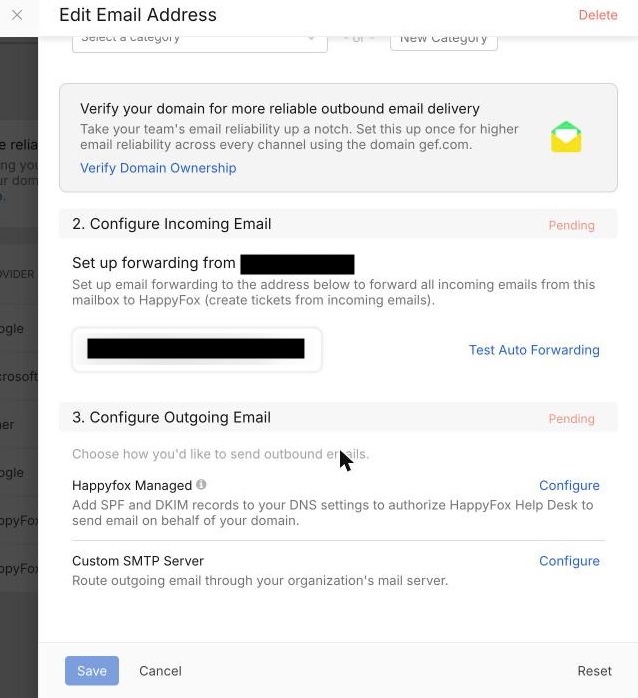
HappyFox sends a test email to confirm the connection. If forwarding is working, a success message appears and tickets will start flowing in.
Provider-specific forwarding guides:
- Gmail: Settings > See all settings > Forwarding and POP/IMAP > Add a forwarding address
- Outlook / Microsoft 365: Settings > Mail > Forwarding
- For other providers, search "[your provider] email forwarding" for instructions
Test Forwarding failed? Check these things:
- You copied the exact forwarding address from HappyFox with no extra spaces.
- Your email provider may have sent a confirmation email to the forwarding address asking you to approve it. Find that email, approve it, then click Test Forwarding again.
- Make sure forwarding is enabled in your provider's settings, not just saved.
Only need incoming email? If you only need HappyFox to receive emails and do not plan to send replies from HappyFox, stop here. Domain verification is not required for incoming-only channels.
Step 3: Configure outgoing email
This controls how HappyFox sends replies from this channel. Choose one of the two options below.
Option A: HappyFox Managed
HappyFox sends outgoing email on your behalf using your domain. This requires DNS records to verify domain ownership, which also improves deliverability and prevents replies from being flagged as spam.
- Select HappyFox Managed as the outgoing delivery method.
- Click Save.
- The DNS Verification panel opens. Complete all four steps in order:
- Verify Domain Ownership: one TXT record to prove you control the domain. See: Verify Domain Ownership.
- SPF Verification: 2 DNS records to add. See: SPF Verification.
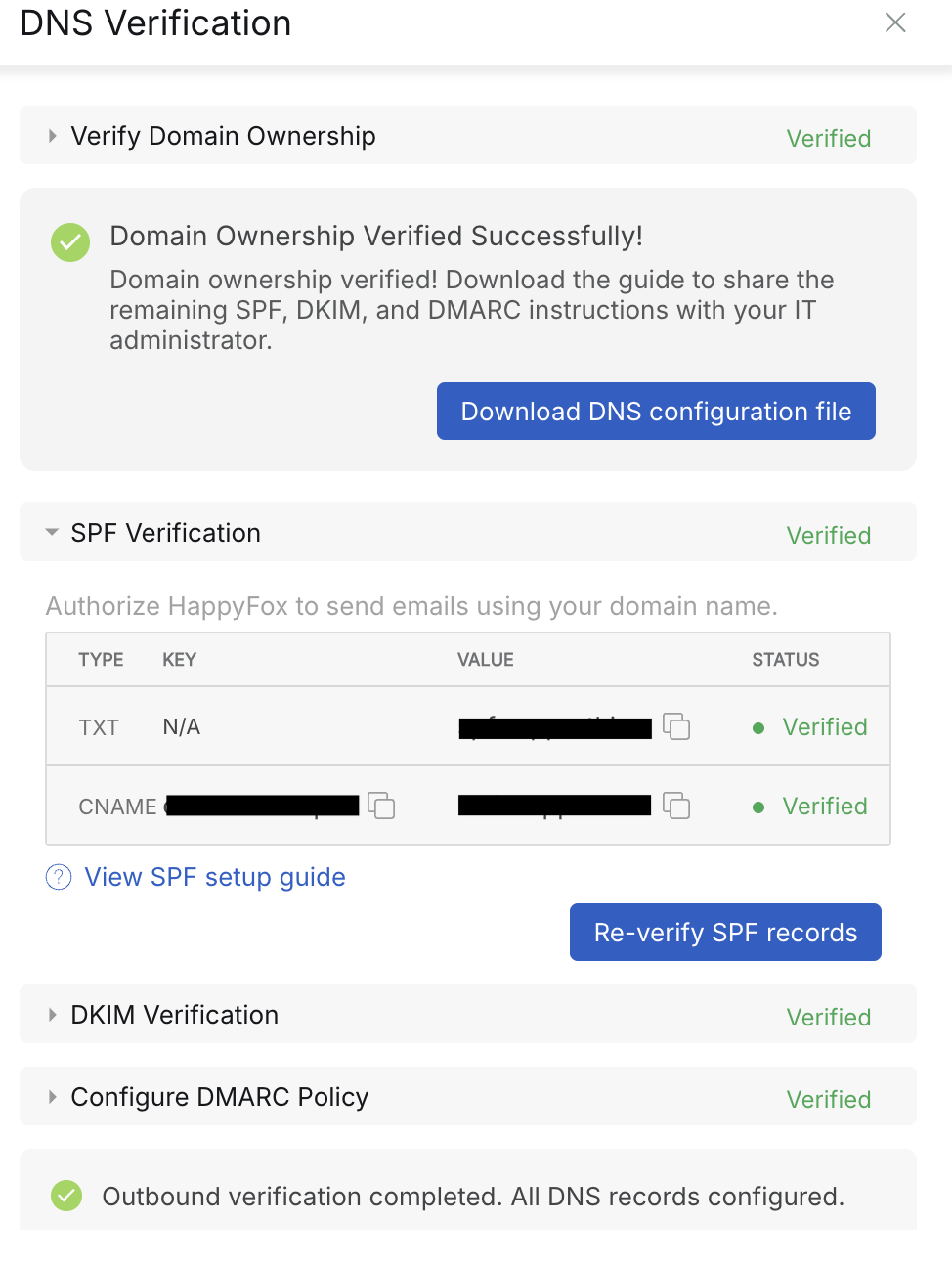
- DKIM Verification: 5 DNS records to add. See: DKIM Verification.
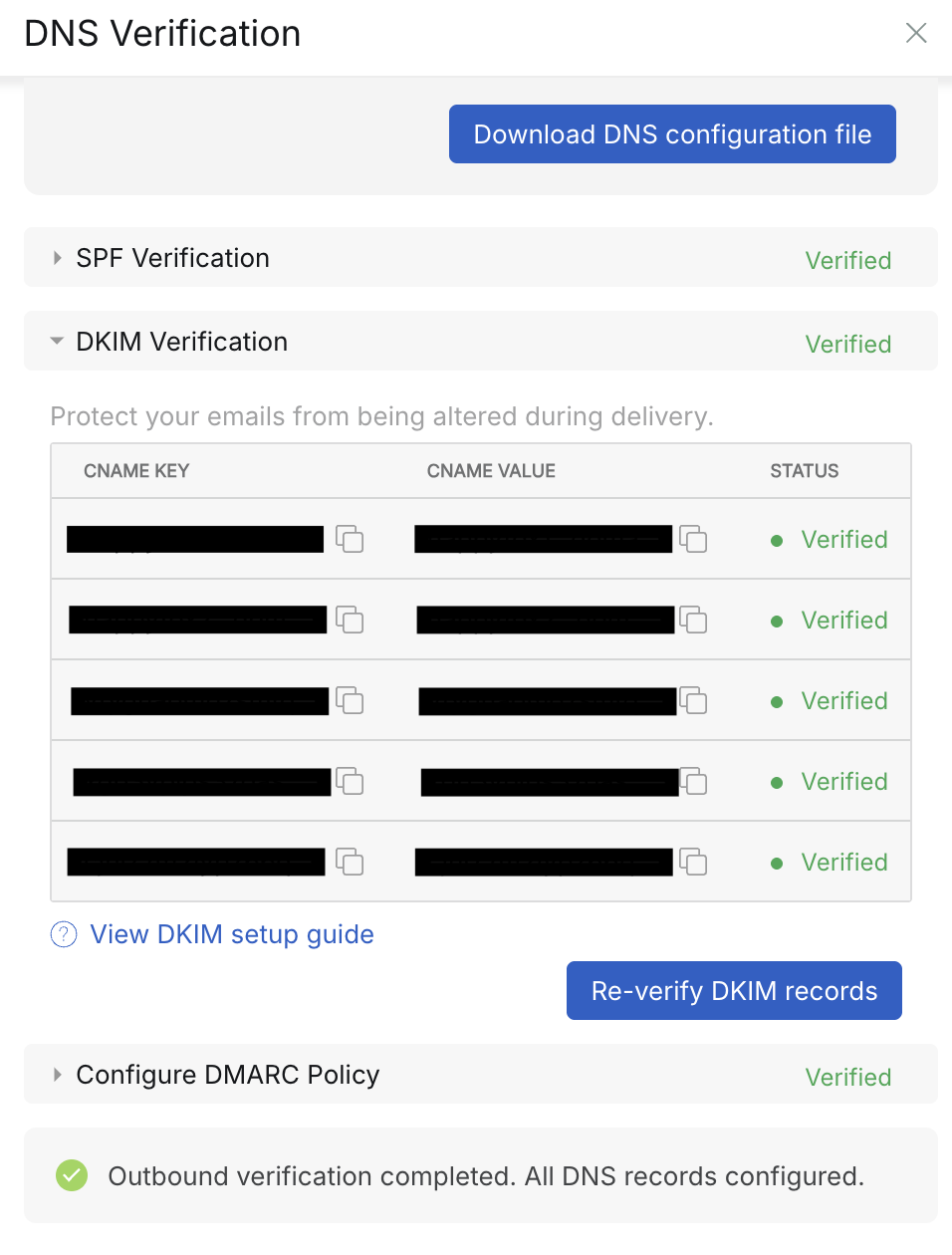
- Configure DMARC Policy: verify or add a DMARC record. See: Configure DMARC Policy.
Option B: Custom SMTP Server
Route outgoing email through your organization's own mail server. Use this if your IT policy requires outbound email to go through your own infrastructure.
Select Custom SMTP Server and follow the in-product configuration steps shown.
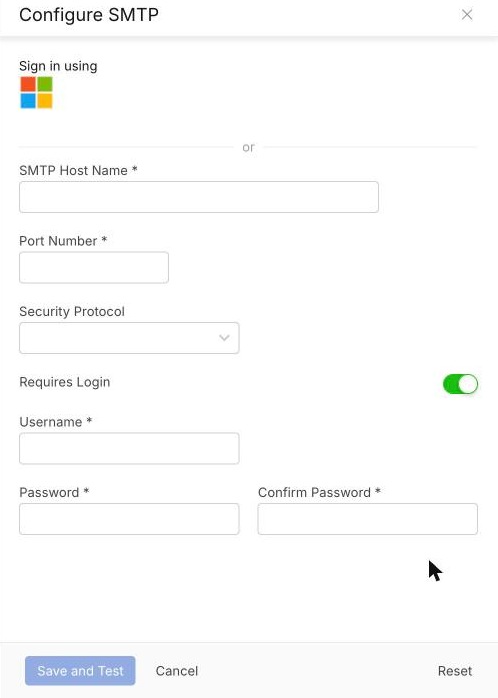
Microsoft 365: Password-based SMTP auth is disabled in most Microsoft 365 tenants. Use OAuth authentication instead. See MS Office 365 SMTP setup for email channels for step-by-step instructions.
Gmail with 2-step verification: You need an app-specific password, not your regular Google account password. See Gmail SMTP App Passwords for instructions.